
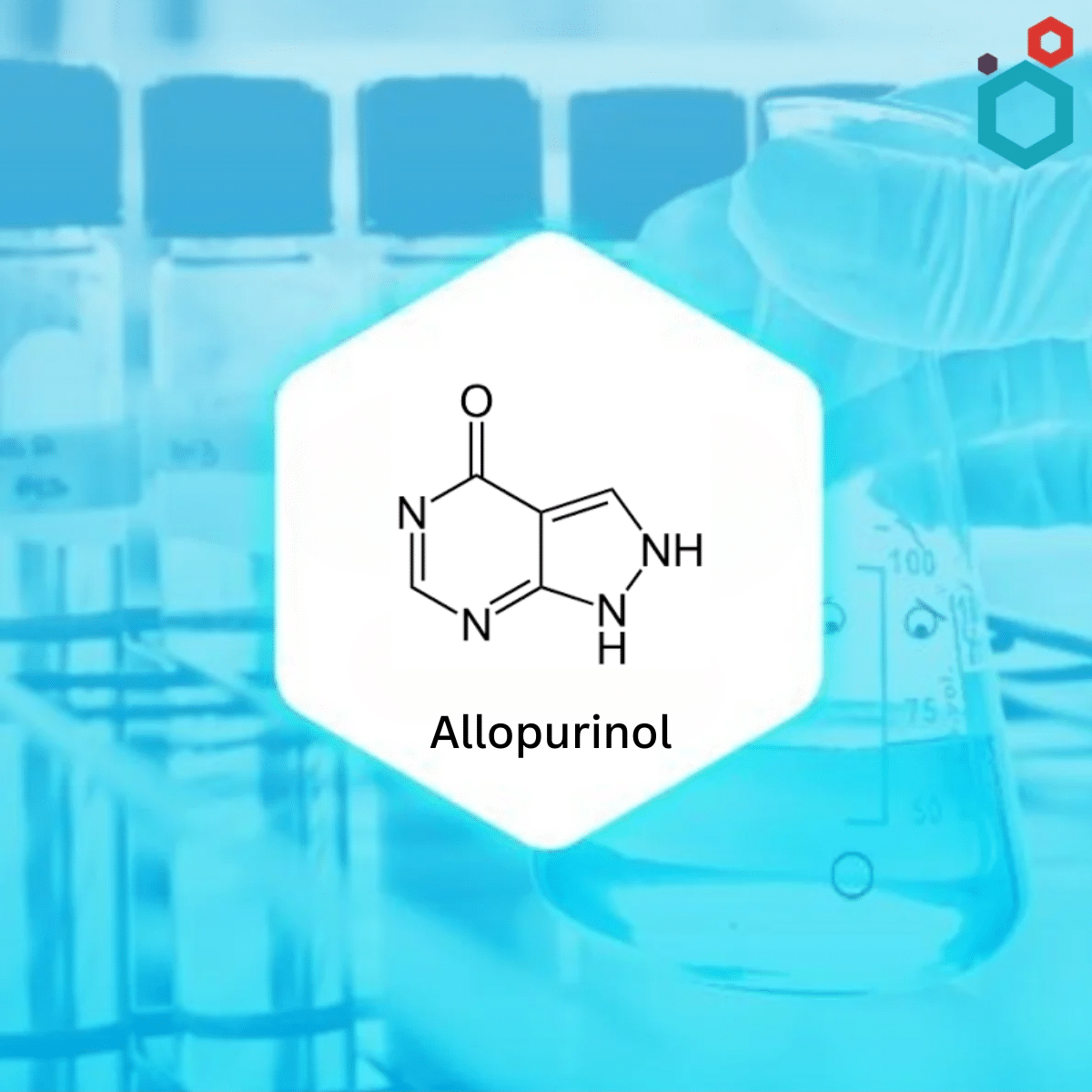
What is Allopurinol?
Allopurinol (CAS No. 315-30-0), sold under the trade names Aloprim and Zyloprim, is a purine analogue and xanthine oxidase inhibitor widely used in anti-gout medicines for the treatment of gout and hyperuricemia. By reducing uric acid levels, it helps in long term prevention of gout attacks, recurrent kidney stones and the prevention of chemotherapy-induced hyperuricemia in patients at risk of tumour lysis syndrome (TLS).
Macsen Labs is a leading Allopurinol API manufacturer and supplier in India, offering Allopurinol API in multiple pharmacopoeial grades, including USP/Ph.Eur./BP/IP, for formulations used in the treatment of gout and hyperuricemia. We offer Allopurinol USP, Allopurinol EP, Allopurinol BP and Allopurinol IP to meet diverse pharmacopoeial requirements across domestic and international pharmaceutical markets.
With expertise in API manufacturing, process development and analytical quality control, Macsen Labs supports bulk Allopurinol API sourcing through grade-specific specifications, impurity profiling and technical documentation, ensuring consistent product quality and pharmacopoeial compliance.
| PRODUCT SPECIFICATIONS | |
|---|---|
| Name of Product | Allopurinol |
| Grades | EP, IP, BP, USP |
| IUPAC Name | 1,5-dihydropyrazolo[5,4-d]pyrimidin-4-one |
| Synonyms | Allopurinolo, Allopurinolum, Alopurinol |
| CAS No | 315-30-0 |
| Molecular Formula | C5H4N4O |
| Molecular Weight | 136.11 g/mol |
| GMP | ✓ |
| DMF | ✓ |
| CEP | Available soon |
Specifications of Allopurinol
| CHEMICAL PROPERTIES | |
|---|---|
| Appearance | Fluffy white to off-white powder |
| Odor | Has only a slight odor or odorless |
| Solubility | Soluble in solutions of potassium and sodium hydroxides; very slightly soluble in water and in alcohol; practically insoluble in chloroform and in ether. |
| Melting Point | Greater than 300 °C |
| Boiling Point | ~250.4 °C |
| Storage | Allopurinol should be kept in a well closed container |
Download detailed Allopurinol COA:
Mechanism of action of Allopurinol
Allopurinol acts as a xanthine oxidase inhibitor, reducing uric acid production by blocking its synthesis during purine metabolism. As a structural analogue of hypoxanthine, Allopurinol is metabolised into its active metabolite, oxypurinol. Both compounds inhibit xanthine oxidase, the enzyme responsible for converting hypoxanthine into xanthine and subsequently into uric acid.
By inhibiting this enzymatic pathway, Allopurinol lowers serum and urinary uric acid concentrations, helping prevent urate crystal formation and recurrent gout attacks. This urate-lowering mechanism supports the long-term treatment of gout and hyperuricemia, while reducing the risk of certain uric acid-related kidney complications.
Allopurinol vs Other Gout Medications
Allopurinol vs Colchicine
- Allopurinol is a xanthine oxidase inhibitor, blocking the conversion of hypoxanthine and xanthine into uric acid, primarily used for long term management of hyperuricemia and gout, while Colchicine is an alkaloid extracted from the Colchicum autumnale plant. It inhibits microtubule polymerization, which interferes with neutrophil motility and activity. This reduces the inflammatory response to urate crystals in joints, controlling pain and swelling during acute attacks.
- Allopurinol prevents complications of hyperuricemia, while colchicine is used for acute gout flares to relieve pain and inflammation.
Allopurinol vs Febuxostat
- Allopurinol and Febuxostat are both xanthine oxidase inhibitors (XOIs). Allopurinol is a Purine analog that inhibits xanthine oxidase, while Febuxostat is a non-purine selective xanthine oxidase inhibitor.
- Allopurinol is a first-line treatment metabolized to oxypurinol and renally excreted, while febuxostat is metabolized in the liver and helps to manage chronic hyperuricemia in patients with gout when allopurinol is not tolerated or ineffective.
Uses of Allopurinol
- Allopurinol helps to reduce serum uric acid levels to prevent recurrent gout attacks and tophi formation.
- It also lowers urinary uric acid levels and reduces the risk of uric acid kidney stones.
- Allopurinol is used in Tumor lysis syndrome (TLS) for patients with elevated uric acid due to chemotherapy or certain metabolic disorders.
Side Effects of Allopurinol
Common Side Effects of Allopurinol include:
- Rash
- Nausea
- Diarrhea
- Drowsiness
Other less side effects include:
- Severe skin reactions, including Stevens–Johnson syndrome (SJS) and toxic epidermal necrolysis (TEN)
- Bone marrow suppression, which may lead to anemia, leukopenia, or thrombocytopenia
- Hepatotoxicity (liver injury)
- Allopurinol Hypersensitivity Syndrome (AHS), a rare but potentially life-threatening reaction that may include rash, fever, liver dysfunction, and kidney impairment
FAQs
Q. What to avoid when taking Allopurinol?
Allopurinol helps lower uric acid levels in the blood, and during treatment, alcohol and high-purine foods should be avoided as they can raise uric acid levels and reduce its effectiveness.
Q. What is Allopurinol used for?
Allopurinol helps lower uric acid levels in the blood, allowing urate crystals deposited in joints to gradually dissolve and reducing the risk of gout attacks.
Q. How does Allopurinol work?
Allopurinol works by reducing the production of uric acid in the body. It restricts the action of an enzyme called xanthine oxidase, which is responsible for converting substances called purines into uric acid and helping prevent gout attacks and reducing the risk of uric acid kidney stones.
Q. What is the most common side effect of Allopurinol?
Allopurinol is a safe and commonly prescribed generic medicine. Many people experience no side effects, while some may have mild stomach upset, drowsiness, or a skin rash.
Q. How to get uric acid out of joints?
Allopurinol is used to treat gout and hyperuricemia and to prevent certain recurrent kidney stones and chemotherapy-associated elevated uric acid levels.
Q. How long does Allopurinol take to work?
Allopurinol starts showing its effect within a few days, but it takes several weeks to lower uric acid levels and may take several months to years for the crystals around the joints to dissolve and be eliminated from the body.
Q. Is Allopurinol harmful to the kidneys?
Allopurinol is generally safe for the kidneys, and it helps to reduce urate crystal deposits and prevent kidney stone formation. However, in severe cases like AHS, it may cause kidney injury.