
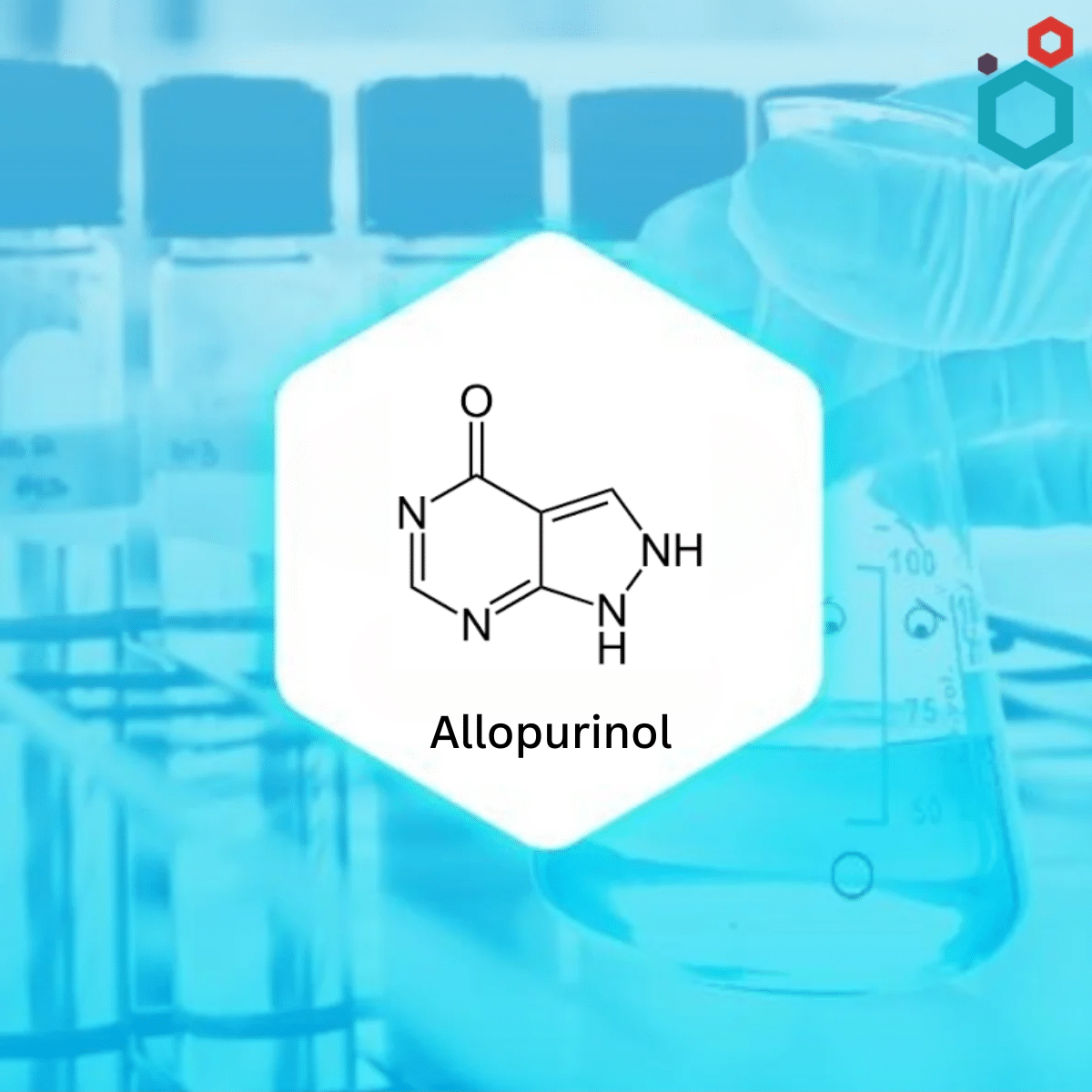
Allopurinol is a xanthine oxidase inhibitor used to treat hyperuricemia and gout. It reduces the production of uric acid by inhibiting xanthine oxidase, the enzyme responsible for converting hypoxanthine and xanthine into uric acid, thereby helping to lower serum and urinary uric acid levels.
Allopurinol, commonly sold under the brand names Aloprim and Zyloprim, was approved for medical use in the United States in 1966 and is available as a prescription medicine and is listed as an essential medicine by the World Health Organization.
| PRODUCT SPECIFICATIONS | |
|---|---|
| Name of Product | Allopurinol EP/BP/USP |
| IUPAC Name | 1,5-dihydropyrazolo[5,4-d]pyrimidin-4-one |
| Synonyms | Allopurinolo, Allopurinolum, Alopurinol |
| CAS No | 315-30-0 |
| Molecular Formula | C5H4N4O |
| Molecular Weight | 136.11 g/mol |
| SR. No | Criteria | Limit/Specification |
|---|---|---|
| 1 | Appearance (Form) | Powder |
| 2 | Appearance (Colour) | Fluffy White to off-White |
| 3 | Solubility | Sparingly soluble in water |
| 4 | Odor | Odorless |
| 5 | Taste | Slightly bitter |
Allopurinol undergoes metabolism in the liver, where it transforms into its pharmacologically active metabolite, oxypurinol. Both allopurinol and oxypurinol inhibit xanthine oxidase, the key enzyme in purine metabolism responsible for converting hypoxanthine → xanthine → uric acid. By inhibiting this pathway, allopurinol reduces uric acid formation and prevents gout attacks, uric acid kidney stones, and complications from hyperuricemia.
Common Side Effects of Allopurinol include –
Less common but other serious side effects include –
Q. What to avoid when taking Allopurinol?
Allopurinol helps lower uric acid levels in the blood, and during treatment, alcohol and high-purine foods should be avoided as they can raise uric acid levels and reduce its effectiveness.
Q. How does Allopurinol work?
Allopurinol works by reducing the production of uric acid in the body. It restricts the action of an enzyme called xanthine oxidase, which is responsible for converting substances called purines into uric acid and helping prevent gout attacks and reducing the risk of uric acid kidney stones.
Q. What is the most common side effect of Allopurinol?
Allopurinol is a safe and commonly prescribed generic medicine. Many people experience no side effects, while some may have mild stomach upset, drowsiness, or a skin rash.
Q. Why does Allopurinol worsen acute gout?
Allopurinol may sometimes worsen acute gout at the beginning of treatment. Because uric acid crystals in the blood decrease in size and can settle in the joints, causing a temporary flare, but this effect is usually temporary and improves with continued use of the medication.
Q. How long does Allopurinol take to work?
Allopurinol starts showing its effect within a few days, but it takes several weeks to lower uric acid levels and may take several months to years for the crystals around the joints to dissolve and be eliminated from the body.
Q. Is Allopurinol harmful to the kidneys?
Allopurinol is generally safe for the kidneys, and it helps to reduce urate crystal deposits and prevent kidney stone formation. However, in severe cases like AHS, it may cause kidney injury.